Andromeda Galaxy

Dispatches from the Rift

Science Log Latest Dispatch
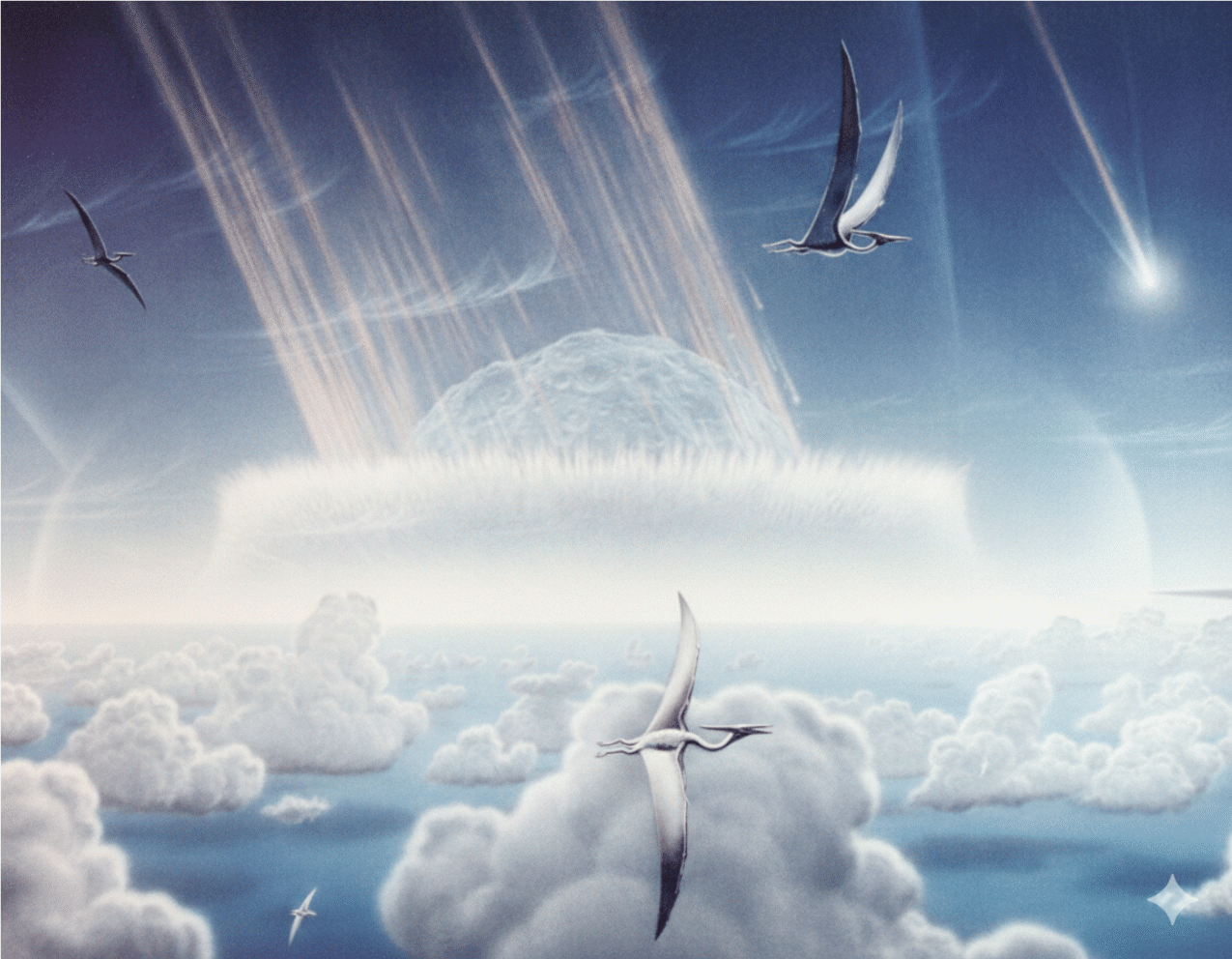
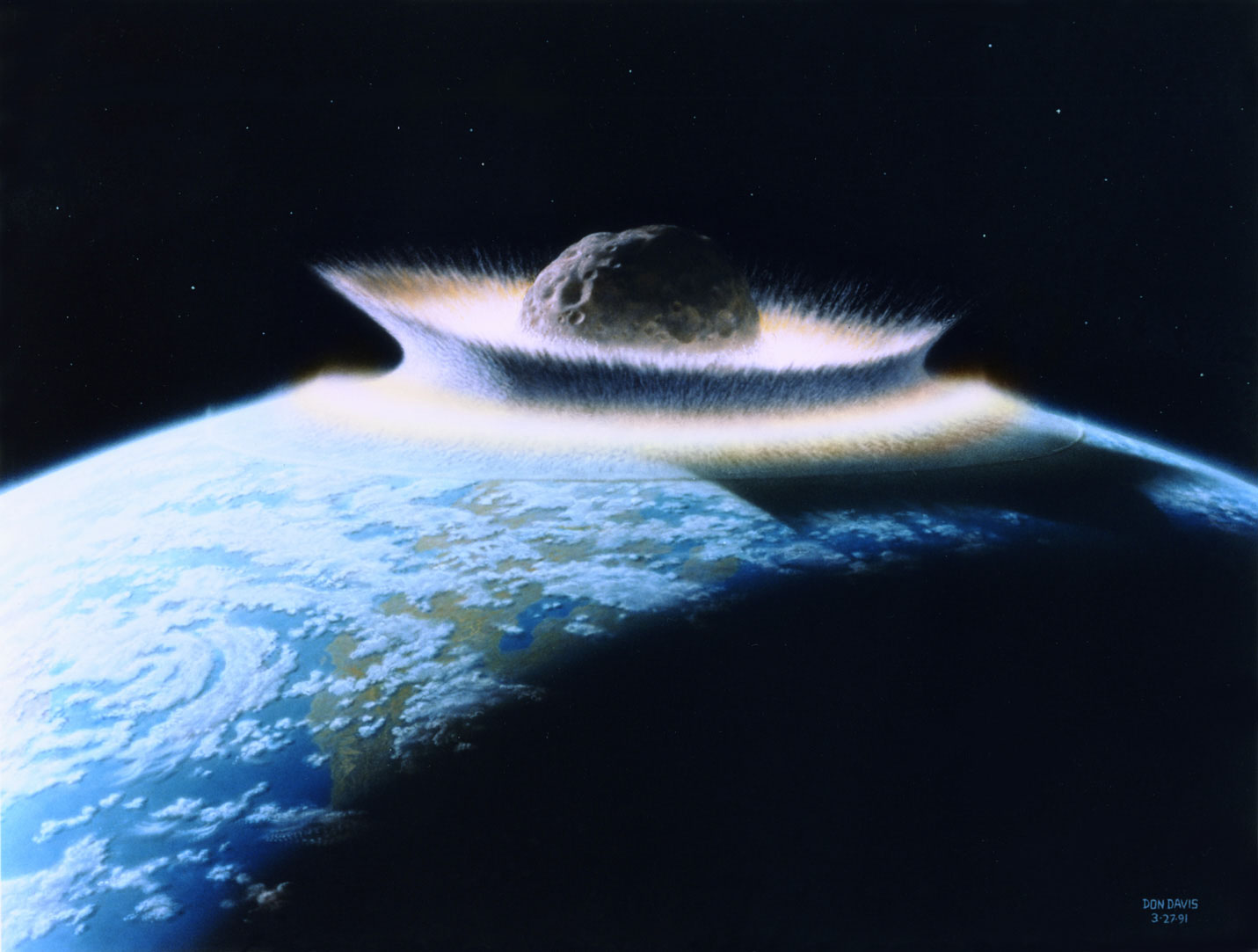
Artistic visualization of a major impact event

A Nod to the Scientists Who Think Outside the Box

By Deborah O’Neill Cordes

It started in the late 1990s in a simple, speculative conversation with my father. That “what if” – dinosaurs evolving intelligence – ignited a consuming passion that lasted years. I found myself diving deep into comparative anatomy, paleontology, astronomy, and geology to construct a scientifically grounded alternate universe, where dinosaurian descendants ruled.

As I think back to the beginning of my research for the Dinosaurian Time Travel Series, I recall my thrill when I discovered two eminent scientists, Carl Sagan and Dale Russell, had also speculated about dinosaurian evolution. If the K-T mass extinction had not occurred, they wondered how certain species of dinosaurs might have developed. Dr. Sagan, in his 1977 Pulitzer Prize winning book, The Dragons of Eden, thought that perhaps small dinosaurs called Sauronithoides had the potential for self-awareness. And, in the late 1980s, Dr. Russell, in his An Odyssey in Time – The Dinosaurs of North America speculated the extremely smart Troodon dinosaurs were the best candidates for the ancestors of sentient saurians, whom he called the dinosauroids.

Dale Russell’s postulations fired my imagination. Troodontids had brain folding, which indicates the mark of intelligence. Were they the smartest dinosaurs of the late Cretaceous? They also had partially opposable digits on their three-fingered hands. Had there been no K-T event, could they have evolved to become tool users? Even spacefarers? I saw Dawann-dracon then, in all her glory, and I began to write her story, mingling her tale with her human counterpart, Dawn.

There have been many others whose discoveries and speculations have added to my work. Scientists Donald Brownlee and Peter Ward helped me to create a panoply of characters. For example, their wonderful book Rare Earth: Why Complex Life is Uncommon in the Universe hypothesized that aliens with faces or body plans like humans are rare. This pushed me to speculate about other forms of sentient life in my series, such as the silicon aliens or the Oracle, beings who are very different from my saurian and human protagonists.

And who can forget the groundbreaking research of the scientists who had the courage and foresight to think outside the box, changing the way we view the following: the relationships between the non-avian dinosaurs and their cousins, the birds; the calamitous end of the Cretaceous some 66 million years ago; the tangled path of human evolution; and the potential for life on other planets and moons. The trailblazers include John Ostrom, Walter Alvarez, Luis Alvarez, Bob Bakker, Jack Horner, Mary Schweitzer, Mary Leakey, Donald Johanson, Gilbert Levin (who has never retreated in his assertion the Viking landers found life on Mars in the late 1970s), and the unsung geophysicist, Glen Penfield, who along with Alan Hildebrand discovered the Chicxulub Crater.

Lastly, I wish to pay tribute to the paleobotanist Jack Wolfe, who was the first to pinpoint the time of year of the K-T impact. Dr. Wolfe discovered that fossils of water lilies and lotus plants indicated they’d been blooming then. The flowers froze after the impact, most likely from the effects of an impact winter-type scenario. Since fossil evidence indicated the plants did not live long enough to bear fruit, Wolfe concluded the K-T event happened in late spring, perhaps in June, around the time of my story.

Originally published in my Author’s Note for Dragon Dawn, now with updates and enhancements.

Copyright © 2026 by Deborah O’Neill Cordes

Deborah O'Neill Cordes
Writing Life Musings
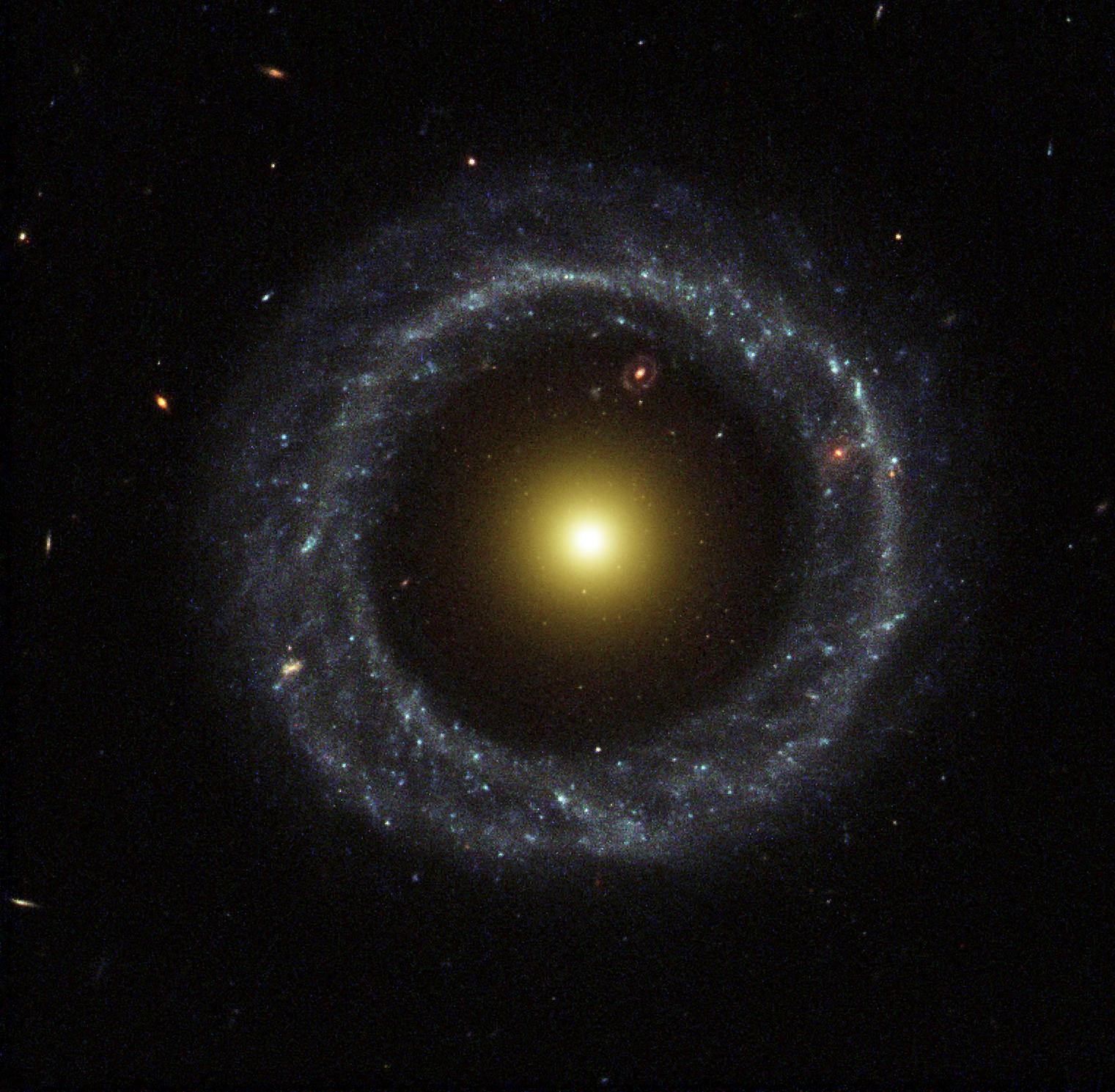
Artistic visualization of Hoag's Object

Write What You Know – I Don’t Think So!

By Deborah O’Neill Cordes

Write what you know. It’s said to be sage advice from the venerable author Mark Twain, but the provenance can’t be verified. Whether he actually said it or not, does the quote have merit? How would it be possible to write about the fantastic or paranormal if authors strictly adhered to this old truism?

Or are people misinterpreting what the phrase actually means?

I have a friend, a fellow author, who chooses to write about small town America, because that’s where she grew up and it’s what she knows. She never considered writing about anything else, yet she emphasized it was her personal choice, and advised me to seek my own comfort level when choosing genres. According to her, the key isn’t to writing about the places and things familiar to you, but the memories of the emotions you’ve experienced in life and your observations of – and compassion for – others.

And she’s correct. As an author of time travel fiction, I’ve embarked upon mind journeys to some fantastical and distant time periods, eras and places impossible to visit: ancient Rome; human exploration of Mars; the empire of Genghis Khan; Elizabethan England; late Cretaceous Earth; and even an alternate universe where dinosaurian creatures have evolved to intelligence. And while research about these faraway realms provided the framework for my tales, my personal experiences have given them sparks of life. This includes the grief I felt when my dog died in my arms, later reimagined in a scene depicting the death of the infant son of a Roman princess; and also the wonder I experienced when visiting the slopes of a Hawaiian volcano, subsequently reworked into the awe felt by astronauts standing before Mars’ vast Olympus Mons.

Write what you know – I don’t think so. The title of this piece refers to the mistaken notion that we, as authors, should never stretch our minds to the limits and imagine the impossible. Consider novels and screenplays like Star Trek in all of its incarnations, H.G. Wells’ The Time Machine, the Dune trilogy, and the tales of Middle Earth. They’re beloved by millions, and why? Because they were written by authors who understood the true meaning of “write what you know,” who’ve gripped their readers with their passions, foibles, tragedies, and triumphs, brought to life by their mighty pens, real life experiences, and fearless imaginations.

My author friend recently shared something interesting with me; she may attempt writing in a new setting, even a different genre, far away from her small town comforts. I say more power to her. Lady, reach for the stars! But there are no rights or wrongs here. On the contrary, we must follow our hearts and stay true to what works for us. Observe the world, grasp your emotions and hold them tight, and then tuck the memories away, to be used in your writing.

And, upon further reflection, I must question whether Mark Twain actually said, “Write what you know.” After all, his wonderful tale, A Connecticut Yankee in King Arthur’s Court, is clearly speculative fiction, not exactly something he ever experienced in the flesh, eh? And yet, this timeswept story also bears the mark of his mind, the working in of his life experiences and interests, from his fascination with late 19th century technology, to his own contempt for monarchy and feudalism.

So, when you write, pull hard and deep to summon your memories – but also let your imagination fly! No matter how original or fantastic your fictional worlds become, they will have emerged from your soul and be... truly... what you know.

Copyright © 2026 by Deborah O’Neill Cordes

Deborah O'Neill Cordes
Writing Life Opinion
Impact event visualization

This Dumpster Dive Will Yield No Treasure

By Deborah O’Neill Cordes

From the Oxford Dictionary: info dump

Syllabification: in·fo dump, noun

A very large amount of information supplied all at once, especially as background information in a narrative.

Ah, the dreaded info dump! I’ve always envisioned it as a monster, lurking in the trash heap of bad writing. It bedeviled me for years, until, through trial and error and lots of sweat equity, I tamed the bloody beast and finished multiple novels and one epic screenplay. My advice to authors who find themselves delving into the monster’s realm? Dip in and then swiftly back off; in other words, work your information in slowly, slyly, and perhaps even shyly. Don’t proclaim your research skills to the world in a heavy-handed way. Instead, do it with stealth. The raging beast will shrink before your prowess and then hopefully disappear, never to return.

During the creation of my sci-fi novel, Dragon Dawn, I found myself with the daunting task of introducing a parallel universe where the non-avian dinosaurs did not go extinct on Earth. In fact, one species subsequently evolved to sentience, creating a spacefaring civilization. How would I describe their appearance without info dumping all of the morphological characteristics? In my original version, which has long since vanished into the ozone of Delete Land, I tried to put as many physical characteristics into one big, long, boring opening narrative. I’m glad it’s gone, although it might be fascinating to see it now, in all its horrible glory.

Time has passed, and I’ve worked hard to develop my craft, ridding myself of the aforementioned beast along the way. Since Dragon Dawn’s opening sequence has saurian astronauts discovering an alien on Mars, this gave me the opportunity to avoid the dump by comparing and contrasting the alien’s appearance with that of a saurian astronaut-physician, who is examining him for the first time.

And how many physical characteristics did I work into this segment? Three fingered hands. Sexual dimorphism. Heads with sensory organs, such as eyes with vertically slit pupils. Trunks with two arms and two legs. The alien creature’s powerful tail, which the saurians lack because of evolutionary reduction. There are many more if you take a second look. Will readers be able to visualize not only the saurians, but the alien as well? I hope so! Throughout the novel’s first chapters, I added even more information, such as the saurians’ head feathers and aqua-green skin. And the info weaving did not stop there. Until the very end of my novel, I blended other facts and interesting snippets of information into dialogue and narrative, giving my readers a sense of other universes and disparate paths of existence, a glimpse of “what might have been.”

Writing is difficult, but your efforts at creating the best possible work will be rewarded. After years of rewrites and the newly finished updates and enhancements in 2025, the final version of Dragon Dawn has given me much satisfaction. The only beasts found were my fictional characters – the info monster had vanished.

Dive into your research and find those treasures, but take your time and weave them into your story with care. Your readers will thank you.

Copyright © 2026 by Deborah O’Neill Cordes

Deborah O'Neill Cordes
Writing Life Inspirations
Impact event visualization

It’s All Relative, Mr. Pitt

By Deborah O’Neill Cordes

Genealogy is one of my passions. It’s a fascinating avocation for me, but it does have a down side, in that at times it becomes positively addictive. As a novelist with multiple works-in-progress, I’ve had to cut down the time I spend researching my family tree. And yet, I don’t believe I’ve frittered away the hours digging into past lives, because the information has provided the framework for several of my plots. If I hadn’t done genealogical research, I wouldn’t have found some amazing and little known stories to weave into my novels.

Ever heard of King Alaric I of the Visigoths, his brother-in-law, Athaulf, and the Roman princess, Galla Placidia? I first learned of their heroic tales during research into one of my most ancient lineages, which goes back to the fifth century A.D. Their intertwined stories sparked the plot of the Morgan O’Neill Roman time travel series, which I co-authored with Cary Morgan. And how about King Otto and Queen Adelaide? Their amazing historical romance provided the fodder for our Italian time travel series. But, perhaps, the most astonishing tale comes from the Stroganoffs of Russia, part of my maternal family. The bloody tale of an ancestor who was skinned alive seemed a natural thread to weave into my own sci-fi, time travel novel, Dragon Dawn. To make it even more interesting, I gave my Dragon Dawn heroine that ancient Russian surname, and astronaut Dawn Stroganoff was born.  

Genealogy also gave me a foot in the door of Hollywood. But I’m not talking about movie deals or TV miniseries – I’m talking cousins. Distant cousins, that is! You see, millions of US and Canadian citizens descend from the Pilgrims. Many do not realize this, having lost familial remembrances about their Pilgrim heritage. For years, I had no idea I possessed such ancestry, either. And then, a few years ago – bingo! – I found several lineages with direct connections to the 1600s and the early Massachusetts Bay Colony. Dozens of famous, infamous, and historical figures also descend from that small group of Pilgrim settlers, and I discovered I’m related to noteworthy folks such as Lucille Ball, Taylor Swift, Barack Obama, Richard Gere, the Fondas, Sigourney Weaver, Paul Revere, the Roosevelt family, the Bush family, Winston Churchill, Princess Diana, and the British royals. I’m also a direct descendant of Ann Marbury Hutchinson, the rebel Puritan woman, who has verified ancestry from the likes of William the Conqueror, King Edward "Longshanks," and the Holy Roman Emperor Charlemagne.

But what connection literally floored me? Why, William Bradley “Brad” Pitt, of course! We both descend from Nathaniel Tilden and Lydia Huckstep, who were born in sixteenth century England, but who immigrated with their seven children to the New World in 1635, on the ship Hercules. I descend from their son, Thomas Tilden, while Brad Pitt descends from their daughter, Sarah. As ascertained from my research, Brad and I are eleventh cousins, 2X removed. I’ve always enjoyed Mr. Pitt on the big screen, especially his breakout performance in “Legends of the Fall.” Way back in the 90s, as I sat in the theater watching "Legends...", I had no idea we were distant cousins. What fun!

So, have I wasted my time pouring over genealogy records? Of course not! My advice to everyone is as follows: wherever your passions lead, you’ll find enrichment by learning about history, which can add so much to all aspects of your life. Once my latest work-in-progress, Dawn of Time, is finished, I’ll venture back to my ancestral world. I can’t wait to see what I discover next. 

Or what new projects blossom from my family tree.

Originally posted in the “Meyette’s Musings” column of author Elizabeth Ford Meyette, now with updates and enhancements.

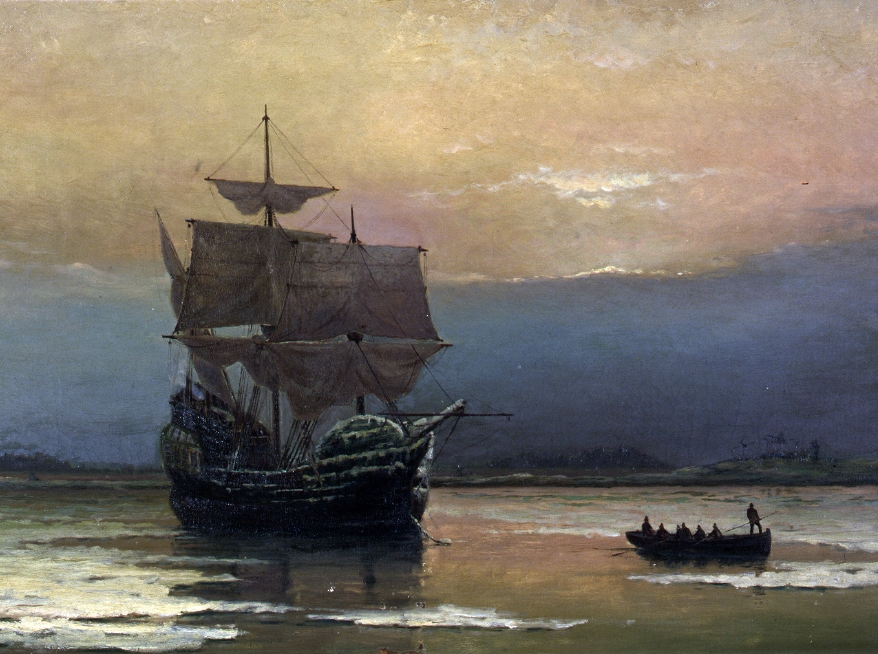
Image of the Mayflower in the public domain. Courtesy of Wikipedia Commons: Mayflower in Plymouth Harbor, by artist William Halsall, 1882.

Copyright © 2026 by Deborah O’Neill Cordes

Also, please check out the Morgan O’Neill time travel novels

Co-authored by Deborah O’Neill Cordes and Cary Morgan.

Covers, Banners, and Character Images by Artist Steven Novak